Julkhyrs – minimalism aesthetics in steppe art

Originally posted on Jozan 05 October 2011 – shared here with thanks to Dr. Elmira Gyul, Fine Arts Institute, Academy of Sciences of the Republic of Uzbekistan.

Julkhyrs – the traditional Uzbek long-piled carpets – are popular among connoisseurs of Oriental art. Unlike the refined decor of Iranian carpets, the appearance of Julkhyrs are extremely laconic, strict, even brutal, both on drawings, and on colours. Their appearance surprisingly correspond to the style of modern minimalistic interiors, which has given a second life to these unique carpets.

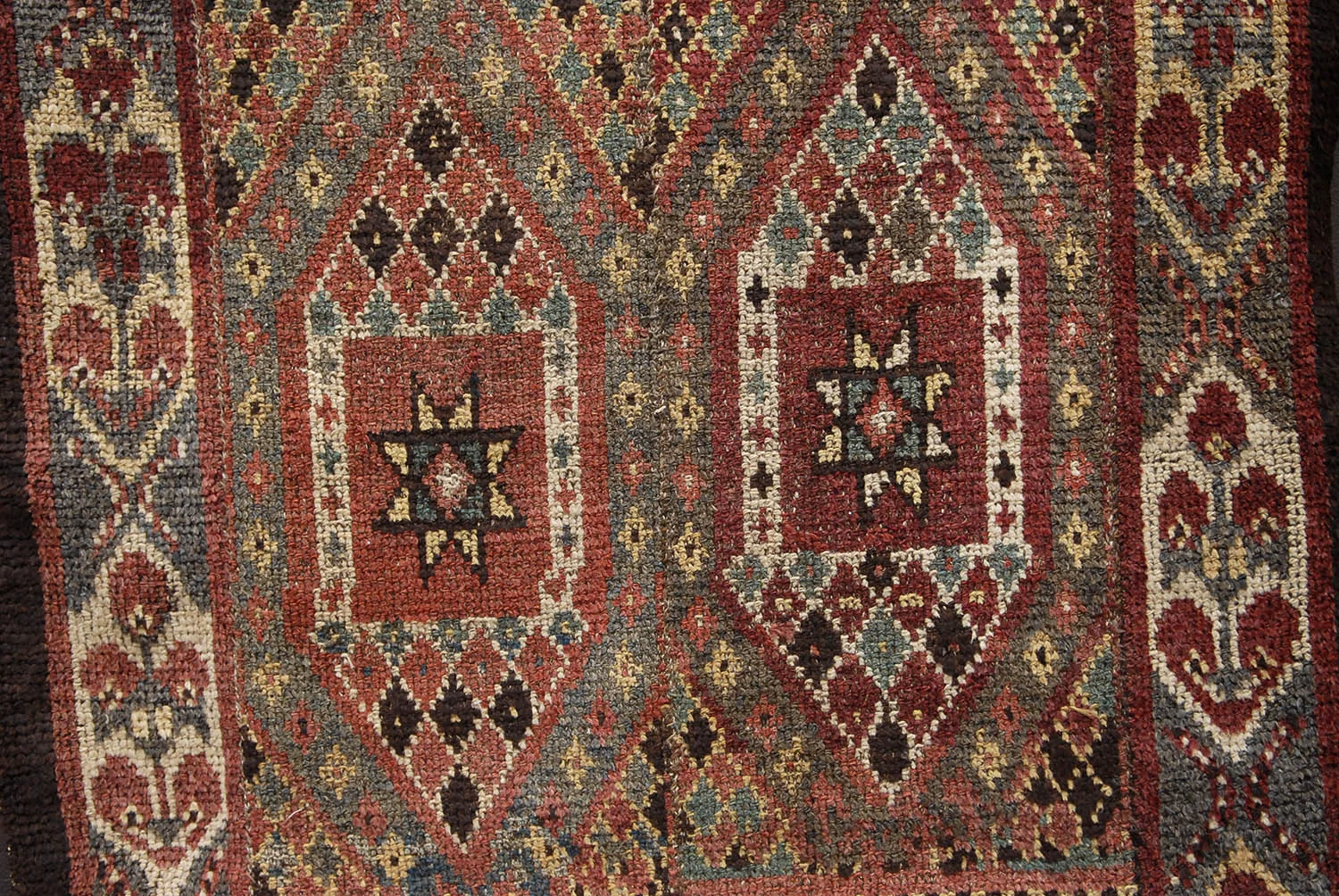
Antique Julkhyr carpet. Photo courtesy Panto Textile Art.

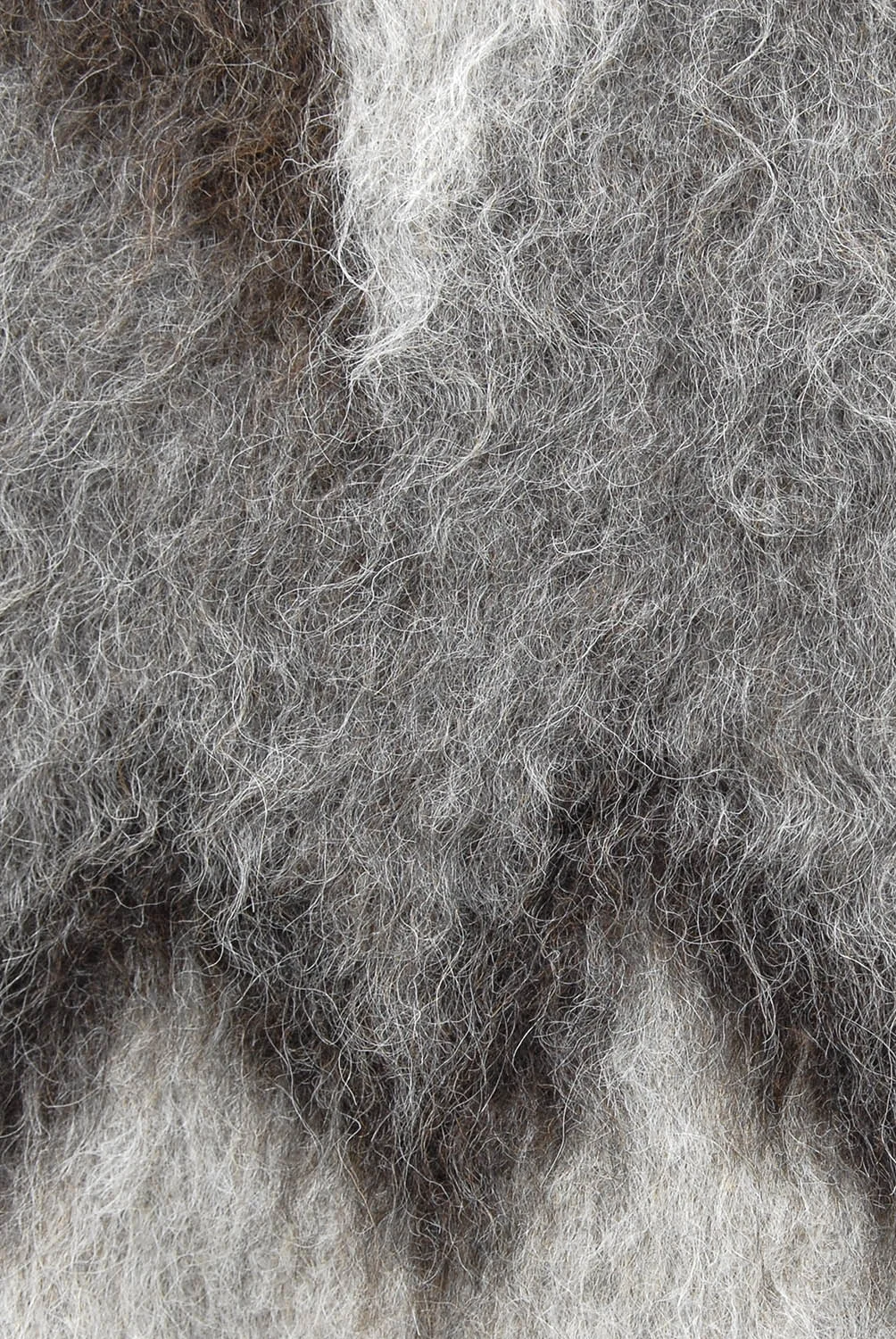
The special features of Jylkhurs consist not only in a laconic decor, but in the texture and the manufacturing techniques. The classical variant is a carpet sewed from several long panels, weaved on a narrow-beam loom, and with a 2 cm long pile.
The composition of these carpets consist of the central field and a narrow single-row border. Thus, Jylkhurs connect pile less weaving using a narrow-beam loom and the classical pile weaving using a wide-beam loom.

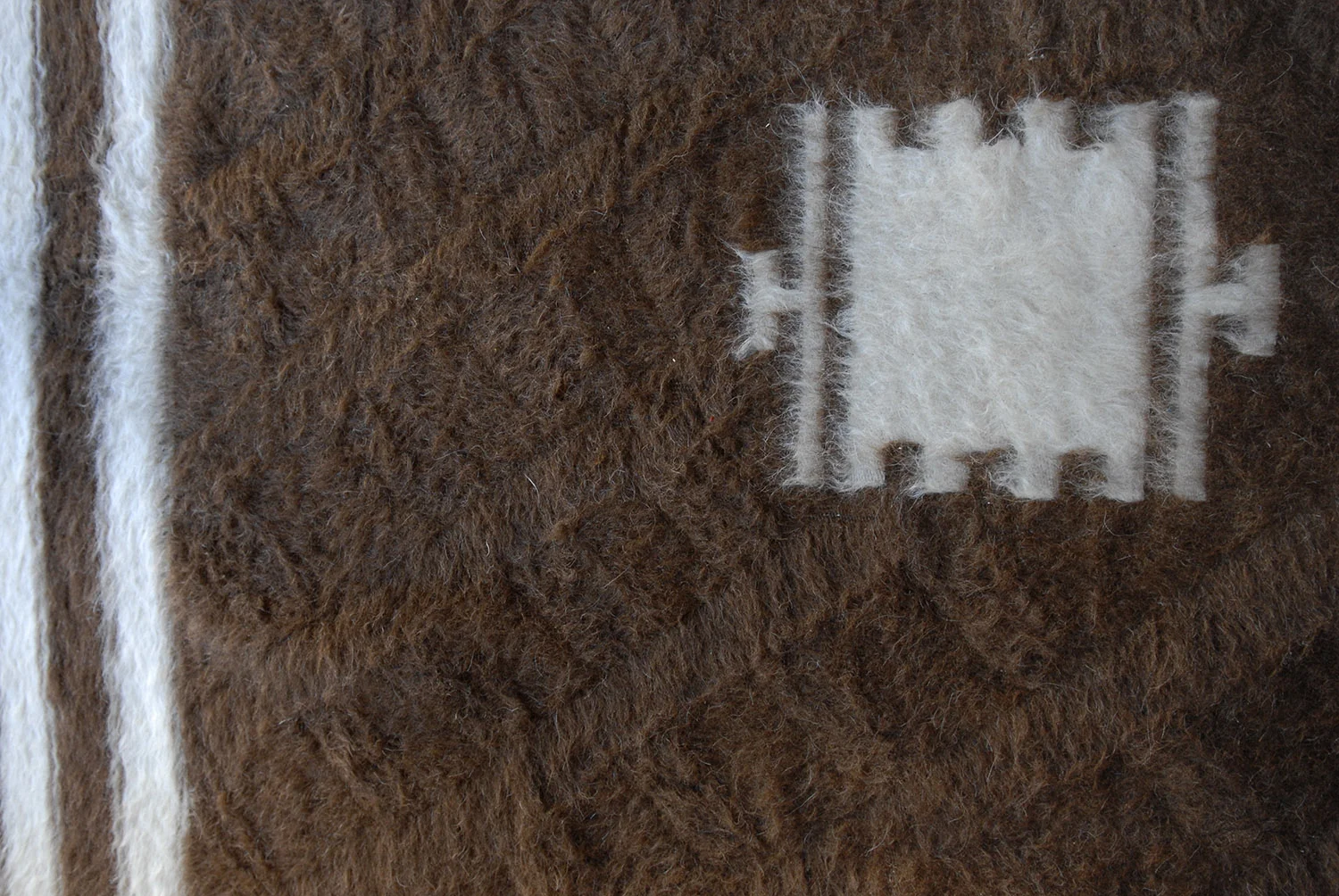
Julkhyr, Uzbekistan. Early 20th century or earlier. Photo courtesy Panto Textile Art.

The archaic manufacturing technique has allowed scholars to assume that Jylkhurs are some of the most ancient kind of a pile carpets; probably, they were known in the beginning of 1 millenium B.C.
In Uzbekistan Jylkhurs has mainly been manufactured by nomadic and semi-nomadic Uzbek tribes from Samarkand and Nurata areas; the Samarkand carpets were weaved on narrow-beam loom, mostly by symmetric knot; Nurata’s – on wide-beam loom, with use of asymmetric knot (due to V. Moshkova). Elena Tsareva assumes that Karakalpaks, living in the Samarkand area, also produced Jylkhur carpets.

Antique Julkhyr carpet. Photo courtesy Panto Textile Art.

It is known that the carpet name – julkhyr – in Arabian and Tadjik is translated as a bear’s skin. The following names were also used: djulvarak (djul – wool, varak – layer), pati zulvarak (pati – fluff, wool; zul – two; varak – layer; it means the wool in two layers, or rough wool carpet). Valentina Moshkova noticed that some Uzbek craftswomen translated the term Jylkhur not as the bear’s skin, but as horse cloth for rich horsemen. Thus, judged by the name, Jylkhurs were produced both as floor carpets, and as horse cloths.
Leaning against the Arabian-Tadjik name, Valentina Moshkova considered that the tradition of Jylkhur manufacturing goes back to an ancient Iranian population but that the tradition is kept alive by Turkic nomadic steppe people.
S. Dudin has noticed that Jylkhurs were on sale in Bukhara and Samarkand markets, both towns with a high percent of Tadjiks. Obviously, the name could be a brand given by local dealers. The Turkic name of these carpets is probably lost.
Jylkhur patterns are identical diamonds, straight- or step-shaped, decorated with claw-shaped or horn-shaped curls, located by longitudinal rows. On the basic medallion there can be a square, a hexagon, stars-shaped motives, and even large flower rosettes (Samarkand). As additional elements – crosses, triangles, rectangles and zigzag lines. All elements have a character of protective force and have been connected with the most ancient magic or totemic images. The basic idea of such décor is the idea of fertility, maintenance of a safe life protected by animals-patrons.
So, for example, the black-and-white border ala-kurt (a motley worm) is the stylized image of two intertwining black and white snakes, as an embodiment of the eternal struggle of evil and good; these snakes were popular images of Turkic mythology. The pair of snakes acted also as a fertility symbol, an amulet protecting from an evil eye.
The strong belief in the magic protection of Jylkhurs patterns allowed them to remain throughout many centuries. As a whole the decor is a reflection of art traditions of the steppe nomad tribes.

Julkhyr carpet. first quarter of 20th century (post Bolshevik Revolution). Photo courtesy Panto Textile Art.

The colours of Jylkhur carpets are also special. The use of these carpets as household utensils has caused an unpretentiousness color choice.
As a rule, un-coloured camel or sheep wool of a natural dark brown colour was used; in details – white, dark blue, yellow and black. Also a deep red tone was popular. This colour made by madder which was the most accessible wild-growing, and also cultivated dye in Central Asia. In general a dark colour is an indicator of a julkhyr’s authenticity and quality.
One more evidences of julkhyrs genesis as carpets of Turkic nomads is the distribution of this kind of techniques of weaving far to the West.
The tradition of long-pile carpets was known in Ukraine in 17th – 19th centuries. Such carpets – Kots – were produced on wide-beam looms, with pile lengths up to 10 cm. Probably, this tradition can be connected with the migration of Turkic people passing the territory of Ukraine and further to the west.

19th century Kots. Photo courtesy Tatiana Krupa.

The typical geometrical decor of Kots – numbers of diamonds – also confirms this connection. As well as nomads, local Ukrainian inhabitants made floor carpets and horse cloths in this technic.

Julkhyrs, as one of the most archaic kind of pile carpets, are unique monuments of the nomadic culture of Central Asia.

The author kindly thanks Tatiana Krupa – the head of restoration workshop of Museum of archaeology and ethnography of Ukraine Slobodskaya of V.N. Karazin, Kharkov National University, who has provided information about the Kots carpets. Also thanks to Alessandro Panto, Panto Textile Art, for helping with images for the article.

Originally posted on Jozan 05 October 2011 – shared here with thanks to Dr. Elmira Gyul, Fine Arts Institute, Academy of Sciences of the Republic of Uzbekistan.

 Read more on Kots click here.

{ 0 comments }

Siirt woven felt Battaniye

by Robert Cobcroft November 22, 2011 Siirt Battaniye

Direct thy eyes on the felt on which thou sitteth. If thou wilt well govern thy kingdom, thou wilt rule gloriously, and the whole world will submit to thy sway.  An orator speaking in the name of the nation, at an assembly of the princes of Mongolia, addressing Temuchin when he assumed the title Chingiz [...]

0 comments Read The Full Article

Woven Felt

by Robert Cobcroft October 23, 2011 lizhnyk

WOVEN FELTS – Siirt and Lizhnyk blankets with Prehistoric Origins “The art of making felt by rolling, beating, and pressing animal hair or flocks of wool into a compact mass of even consistency is assuredly older than the art of spinning and weaving. In point of time, felted stuffs followed immediately, or originated contemporaneously with, [...]

0 comments Read The Full Article

Choga and Chuba a Central Asian Primitive Pieced-Skin Tradition

by Robert Cobcroft August 16, 2011 Afghan Fur Coats - Posteen

Choga and Chuba a Central Asian Primitive Pieced-Skin Tradition The Choga Chuba Posteen connection. In Bokhara Uzbekistan a “furred robe” was called a Choga, as noted in the 1903 glossary of colloquial Anglo-Indian words and phrases. At the same time in Afghanistan the word Posteen would have been used to describe a “furred robe”. While [...]

0 comments Read The Full Article

Hazara Fur Coat – Posteen Circa 1927

by Robert Cobcroft July 30, 2011 Afghan Fur Coats - Posteen

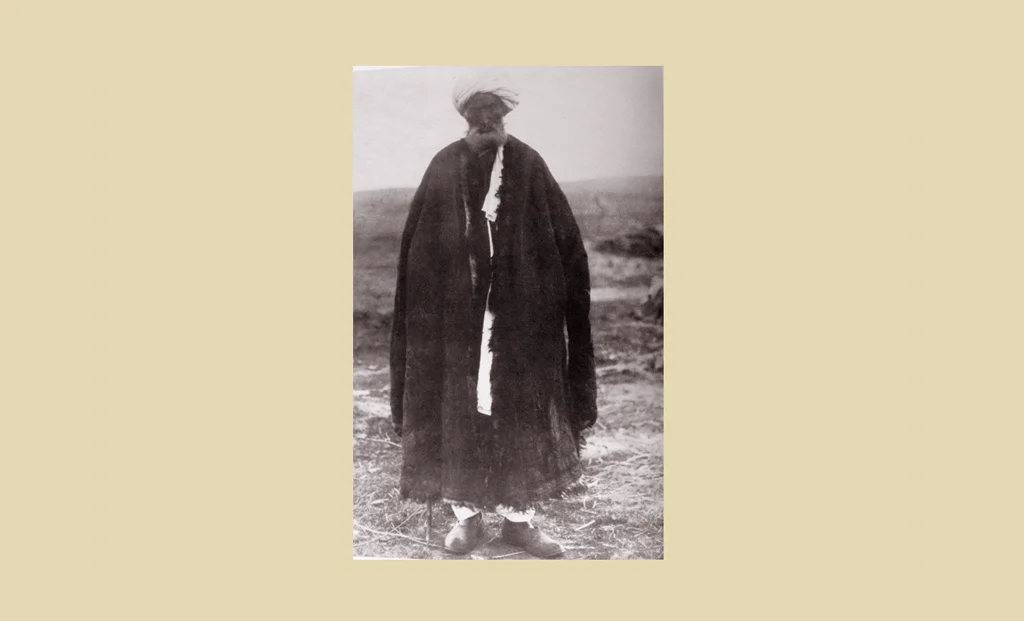
“When I first saw a Posteen, I took it for a lady’s dress, as it resembled, what the fair sex would designate, a Polka Jacket.” 1 Hazara man sporting a well used coat similar in styling to the Pashtun Skin Coat of 1867 called a posteen. The edge of this coat appears to be embroidered [...]

2 comments Read The Full Article

Samarkand Uzbek Julkhirs Primitive Rug

by Robert Cobcroft July 27, 2011 Bearskin Rug

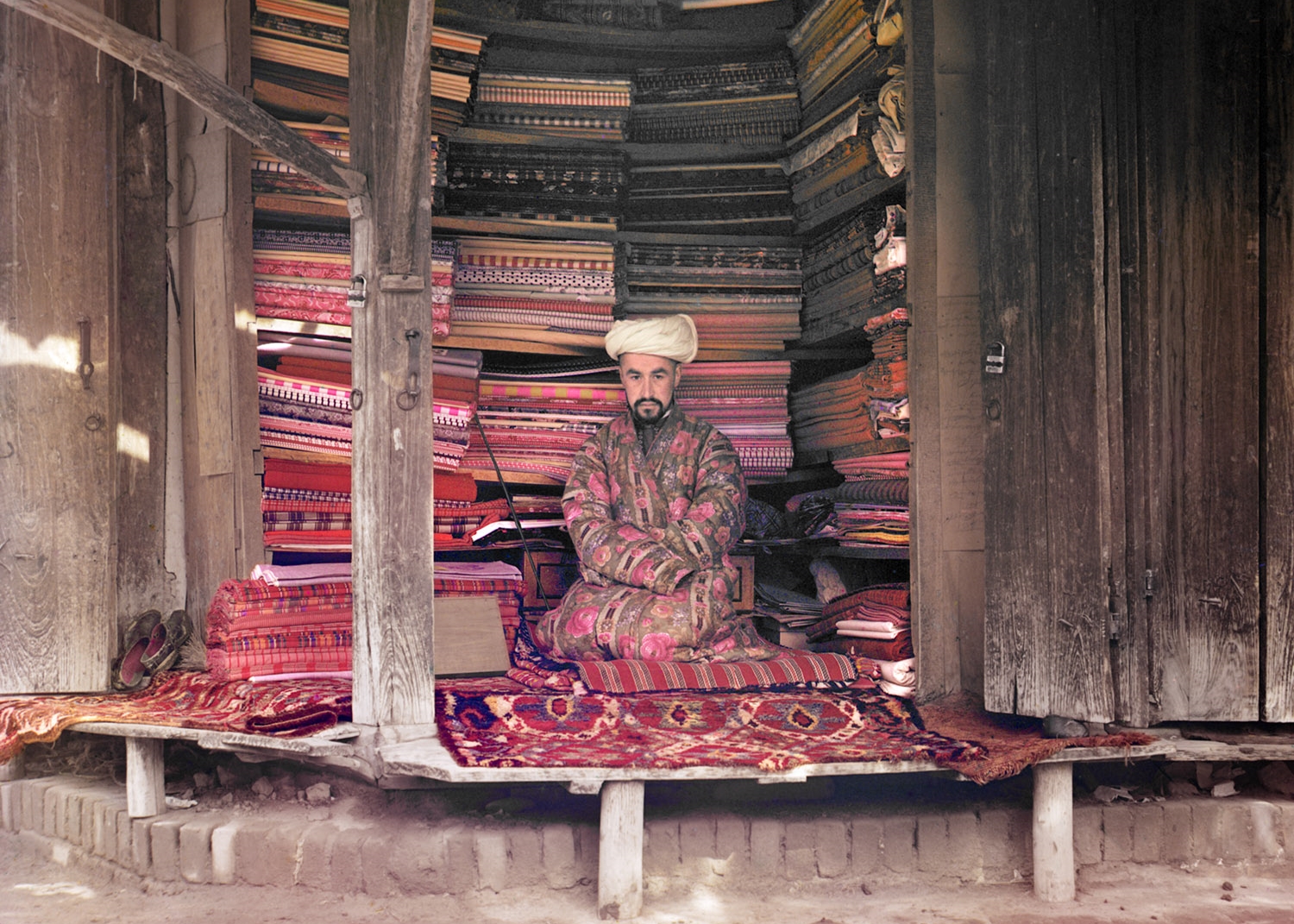
Chest Vendor seated on Uzbek Julkhirs, Julkhyrs primitive rug Samarkand Zaravshan district between 1865 and 1872 from the Turkestan Album. The high pile of the Julkhirs was favoured by some nineteenth Century merchants of Samarkand, the obvious attraction being a more comfortable rug  for the long hours seated at the market place. Variations of the [...]

0 comments Read The Full Article

Primitive Rare Hooked Rugs

by Robert Cobcroft May 10, 2011 Primitive Rug Hooking

In Europe and the United States many primitive long piled shaggy variations exist in the form of home made rugs. U.T Sirelius made what he calls an exhaustive study of  “The Ryijy-Rugs of Finland”1 in 1926, producing a sumptuous limited edition book with 200 copies available in the English language edition. Rya rugs of Finland [...]

0 comments Read The Full Article

Afghan Posteen Cloak & Tibetan Chuba Gown Primitive Pieced Skin Winter Warmers

by Robert Cobcroft April 18, 2011 Afghan Fur Coats - Posteen

Late in the Nineteenth Century Western visitors had lots to say about the Primitive skins worn by Central Asian nomads, aristocratic Pashtuns, bandit robber nomads and horse rustling dealers. Dr Susie Rijnhart called them “Ugly sheepskin gowns”. The writers of “The People of India” called them “a cloth lined cloak and a most comfortable wrapper”. [...]

0 comments Read The Full Article

Primitive Skin Cloaks Afghanistan 1868 Posteen and Horse Rustlers

by Robert Cobcroft April 7, 2011 Afghan Fur Coats - Posteen

Primitive Skin Cloaks from the Stone Age – Posteen and Horse Rustlers   B. Simpson photographed Colonel Waterfield and his men in Kurum Valley near “Peiwar Valley” Afghanistan in 1878. A Ghilzai Pashtun, wearing a Posteen was recorded standing to the left of the group. Patterned cloth has been used on the outside of the [...]

0 comments Read The Full Article

Primitive Eskimo Skin Rugs

by Robert Cobcroft February 18, 2011 Animal Hides

Out of Africa into a haze of white and ice Humans aren’t born with thick furry waterproof coats like polar bears. Before the age of petroleum and faux plastic fur – the choice was simple, kill the bear and wear it, graphically illustrated in Star Wars – The Empire Strikes Back. On planet Hoth, Luke [...]

0 comments Read The Full Article